The catalogue
All Simulations
Each one runs in the browser and takes a few seconds to understand. Change a number, watch what moves — then change it back and see whether you were right about why.
Chemistry
30 simulations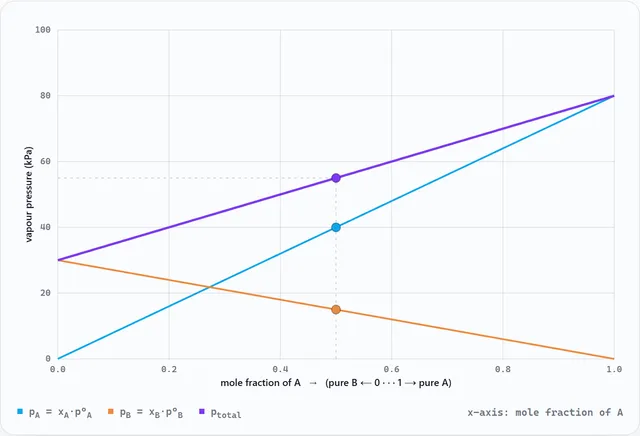
Solutions Raoult's Law — Vapour Pressure of Solutions Slide the composition and watch two volatile liquids build the total vapour pressure.
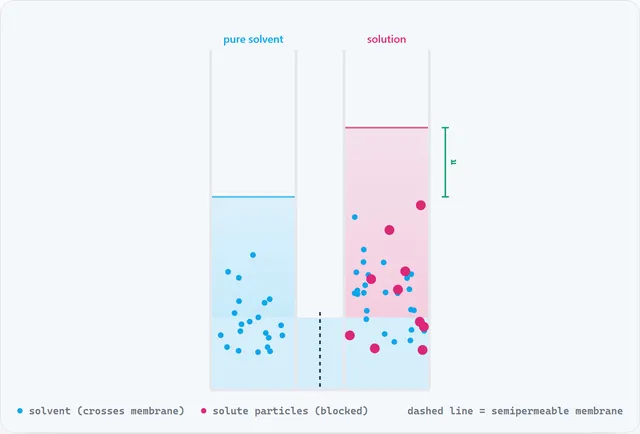
Solutions Colligative Properties & Osmosis Solvent crosses a membrane and raises a column until osmotic pressure balances the flow.
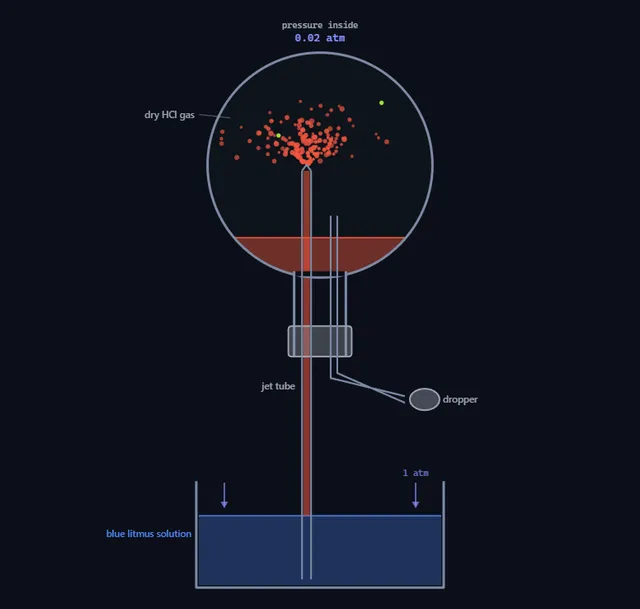
Study of Compounds Fountain Experiment — Solubility of HCl Gas Squeeze in water, watch the pressure collapse and the atmosphere push up a red fountain.
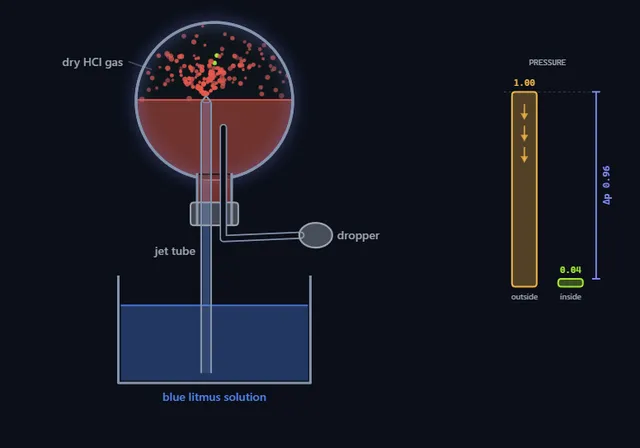
Study of Compounds Fountain Experiment — Solubility of HCl (Explainer) A narrated walkthrough — run it once for solubility, once with litmus for acidity.
Study of Compounds Study of Compounds — Gas Evolution & Confirmatory Tests Step through the standard tests for HCl, NH₃, HNO₃ and H₂SO₄ and see each gas and its confirmatory test.
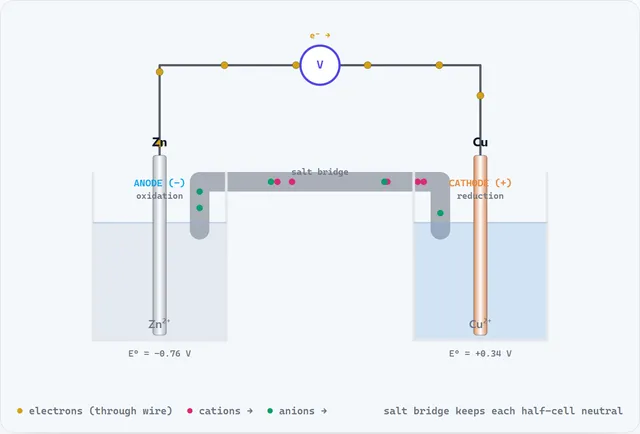
Electrochemistry Galvanic Cell — Electrode Potentials & EMF Pick two metals and watch electrons flow, ions migrate and the voltmeter settle.
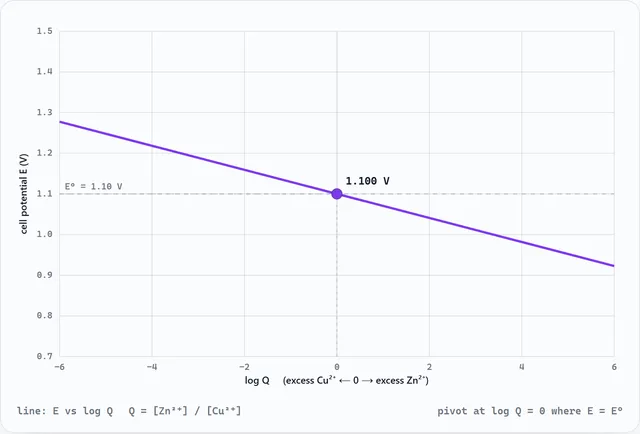
Electrochemistry Nernst Equation — Concentration & Cell Potential Change ion concentrations and temperature and watch the cell voltage drift off E°.
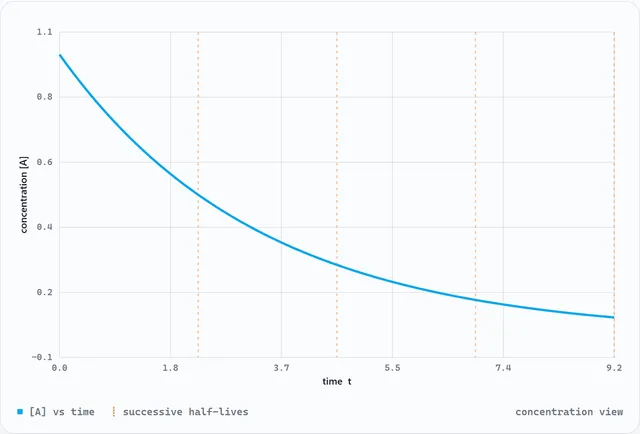
Kinetics Reaction Order & Integrated Rate Laws Watch [A] fall for zero, first and second order — and how the half-lives change.
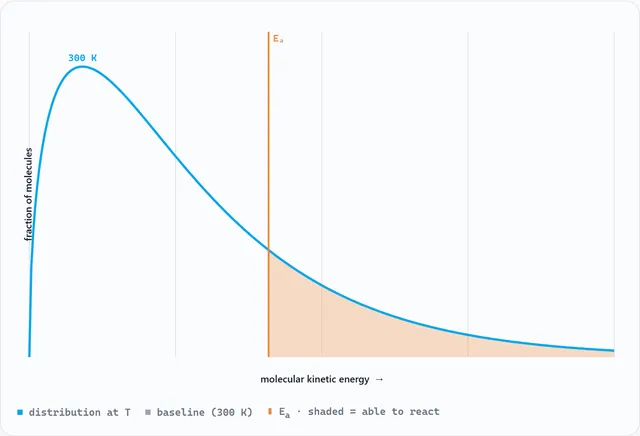
Kinetics Arrhenius & Collision Theory — Activation Energy Raise the temperature and watch the Boltzmann tail past the activation energy fatten.
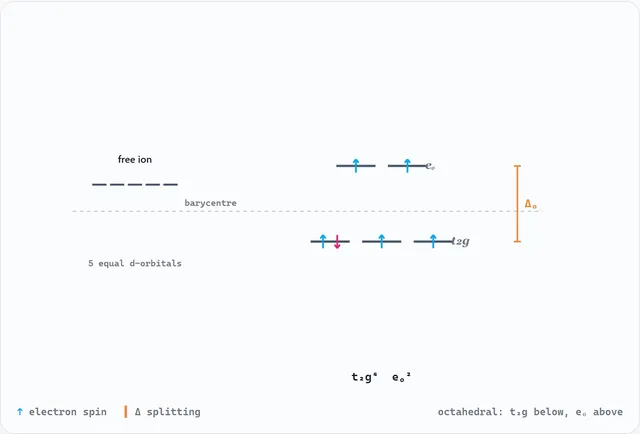
Coordination Compounds Crystal Field Theory — d-Orbital Splitting Split the d-orbitals with a ligand field and watch spin, magnetism and colour follow.
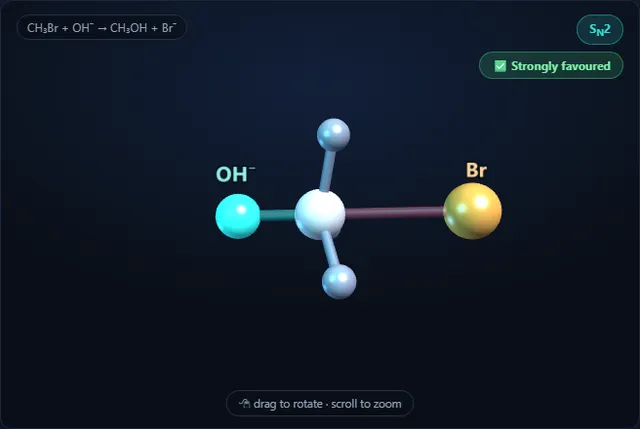
Haloalkanes & Haloarenes SN1 vs SN2 — Nucleophilic Substitution Watch SN2 flip a molecule inside out in one step, and SN1 go through a flat carbocation — in 3D.
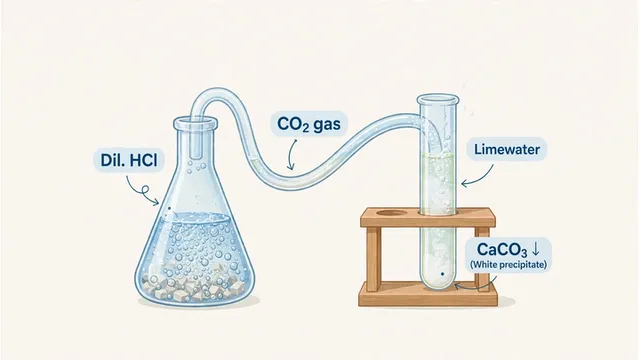
Acids, Bases & Salts · 5 steps Carbon dioxide, and how to prove it Make a gas from marble chips and acid, then show it really is carbon dioxide.
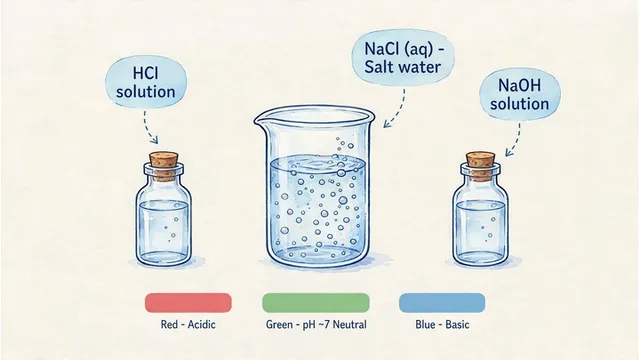
Acids, Bases & Salts · 5 steps Neutralisation, watched with an indicator An indicator turns a colour change into the moment an acid cancels a base.
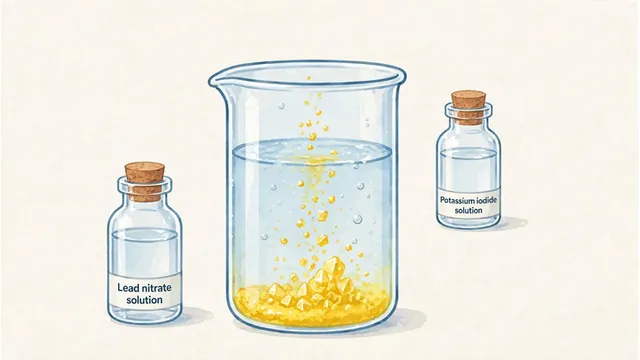
Chemical Reactions · 3 steps Two clear solutions, one yellow solid Nothing about either liquid suggests a colour — and yet a bright yellow solid appears.
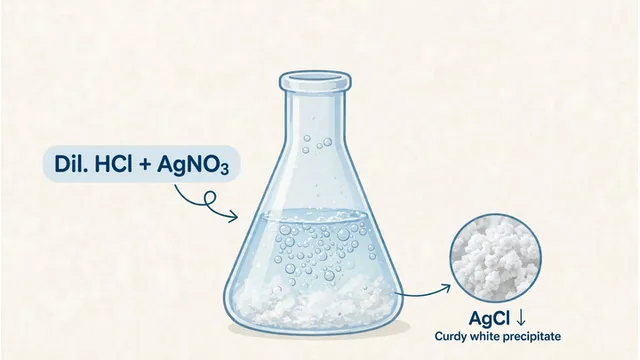
Study of Compounds · 4 steps HCl Test Using Silver Chloride Silver nitrate meets dilute hydrochloric acid — a curdy white solid forms, and only ammonia will dissolve it.
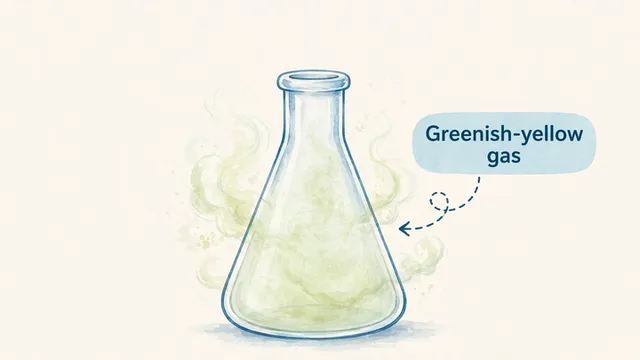
Study of Compounds · 5 steps HCl Test - Greenish Yellow Chlorine Heat manganese dioxide with the concentrated acid, and a greenish-yellow gas gives away what the acid is made of.
NaCl + H₂SO₄ → NaHSO₄ + HCl↑
Study of Compounds · 8 steps Making hydrogen chloride, and the test that names it Warm rock salt with concentrated sulphuric acid, collect the gas, and watch it meet ammonia.
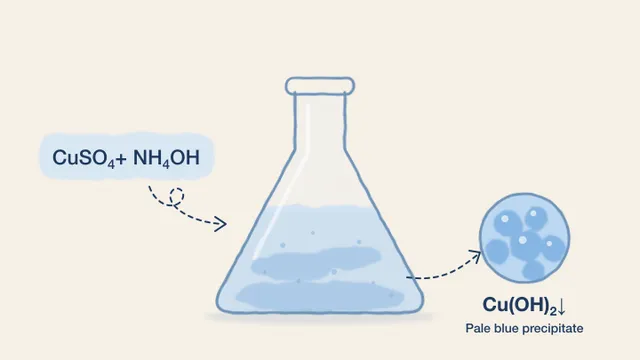
Study of Compounds · 2 steps Ammonia Test - Pale Blue A little ammonia added to copper sulfate throws down a precipitate neither solution showed on its own.
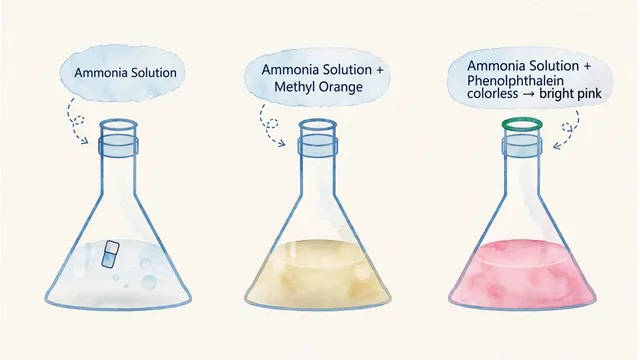
Study of Compounds · 6 steps Ammonia's basic nature, shown three ways The same ammonia solution turns pH paper blue, methyl orange yellow, and phenolphthalein pink.
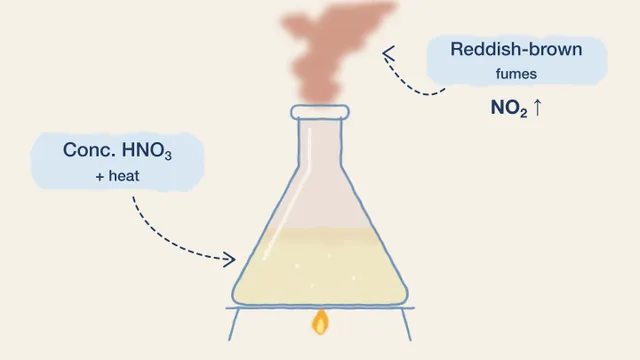
Study of Compounds · 4 steps Nitric Acid Test - Reddish Brown Fumes Heat concentrated nitric acid on its own, and reddish-brown fumes appear — no second reagent required.
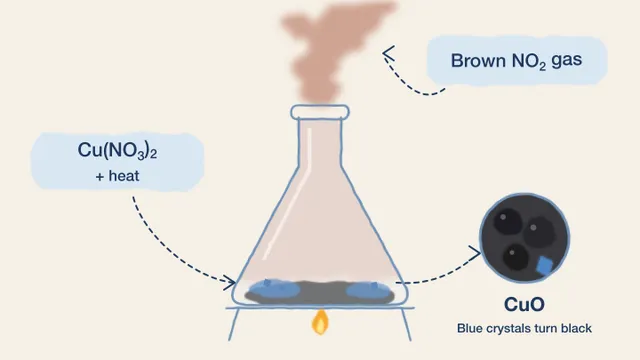
Study of Compounds · 4 steps Metal Nitrate Test - NO2 Gas Heat copper nitrate crystals, and the blue solid turns black while reddish-brown fumes escape.
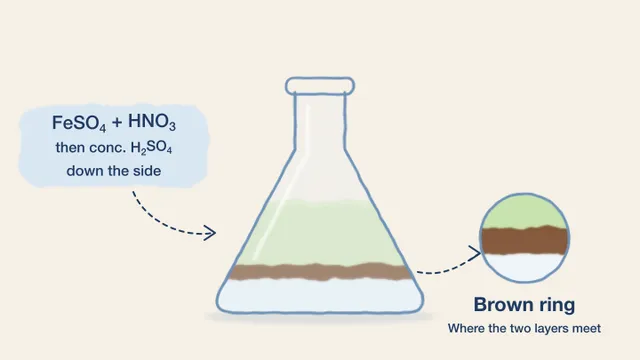
Study of Compounds · 4 steps HNO3 Test - Brown Ring Test Ferrous sulfate meets dilute nitric acid and concentrated sulphuric acid, and the pale green solution turns brown.
BaCl₂ + H₂SO₄ → BaSO₄↓ + 2HCl
Study of Compounds · 2 steps Dilute sulphuric acid, and the white precipitate that confirms it Barium chloride meets dilute sulphuric acid, and a white solid that will not dissolve gives the acid away.
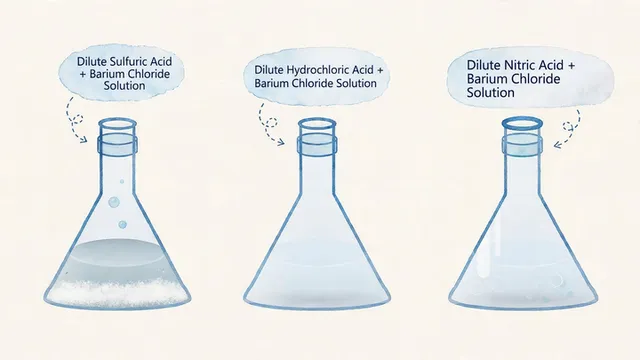
Study of Compounds · 6 steps Telling dilute sulphuric acid apart from hydrochloric and nitric acid The same barium chloride is added to three dilute acids — only one of them turns cloudy.
CaCO₃ + 2HCl → CaCl₂ + H₂O + CO₂↑
Mole Concept · 8 steps How much gas comes off a marble chip? The same reaction as the lime-water test, asked with a number. 🔒 Sign-in needed
HCl + NaOH → NaCl + H₂O
Mole Concept · 8 steps How much alkali neutralises the acid? Two colourless solutions, no visible change, and a number that says exactly when it is neutral. 🔒 Sign-in needed
Zn + 2HCl → ZnCl₂ + H₂↑
Mole Concept · 6 steps How much hydrogen does zinc give? Moles from a mass, not a volume, and the metal left over at the end. 🔒 Sign-in needed
Pb(NO₃)₂ + 2KI → PbI₂↓ + 2KNO₃
Mole Concept · 6 steps Equal amounts, unequal shares The same volume at the same strength, and still one reagent runs out first. 🔒 Sign-in needed
Fe + CuSO₄ → FeSO₄ + Cu↓
Mole Concept · 6 steps How much copper plates onto the nail? A displacement you can weigh: blue solution, iron nail, and copper coming out. 🔒 Sign-in needed
Cu + 2AgNO₃ → Cu(NO₃)₂ + 2Ag↓
Mole Concept · 5 steps Silver from a copper strip Each copper atom frees two silver atoms, so you gain more mass than you lose. 🔒 Sign-in needed
Physics
28 simulations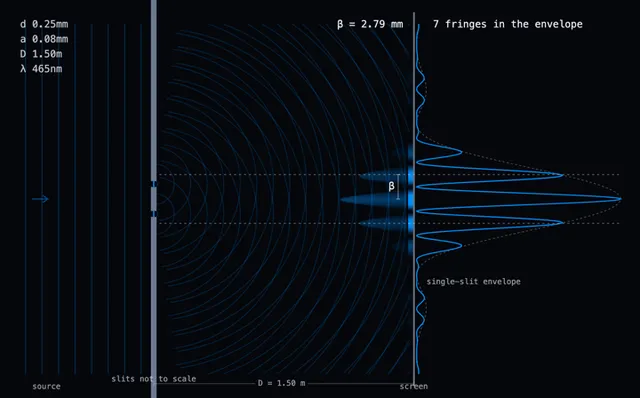
Ray Optics Young's Double-Slit Experiment Coherent light through two slits paints bright and dark interference fringes.
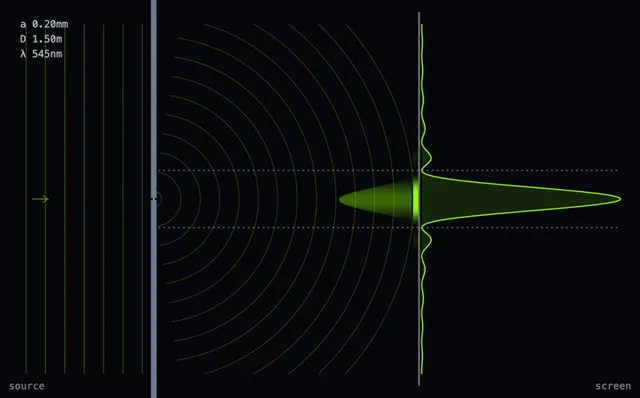
Ray Optics Single-Slit Diffraction A single narrow slit spreads light into a broad central band with faint side maxima.
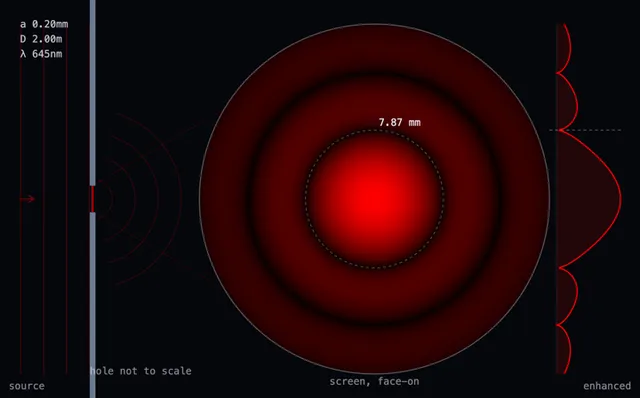
Ray Optics Circular Aperture — Airy Rings Light through a round hole forms a bright disk ringed by concentric halos.
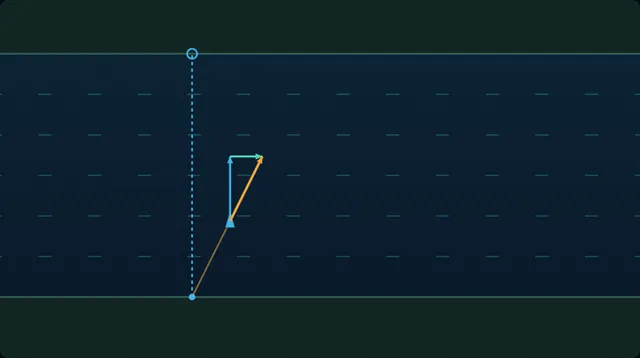
Kinematics Crossing a River — Relative Velocity Aim upstream or straight across and watch the current sweep the boat.
Kinematics Relative Velocity — The River Crossing (Explainer) A guided, step-by-step walkthrough of the river-crossing vectors.
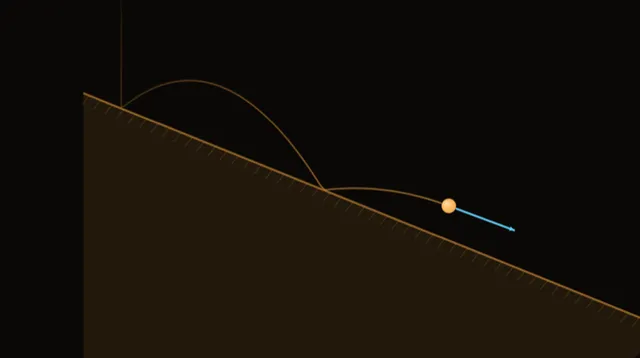
Kinematics Bouncing Ball on an Incline A ball dropped onto a slope bounces in ever-shifting parabolic hops.
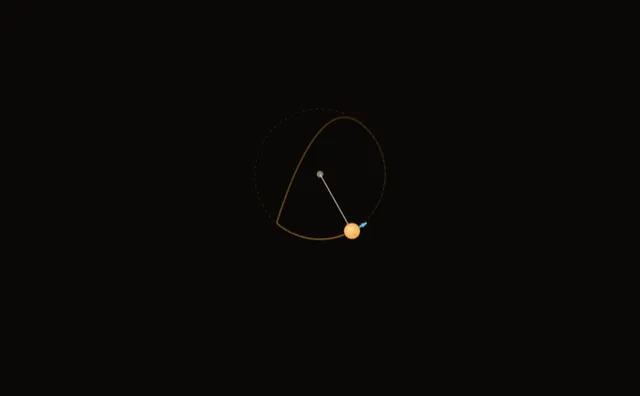
Newton's Laws of Motion Ball on a String — Vertical Circle Whirl a ball in a vertical loop and find the speed the string needs to stay taut.
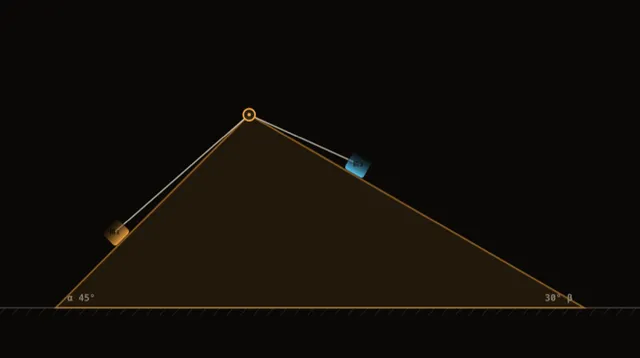
Newton's Laws of Motion Wedge & Pulley — Two Connected Blocks Two blocks on inclined faces share a string over a pulley — who slides which way?
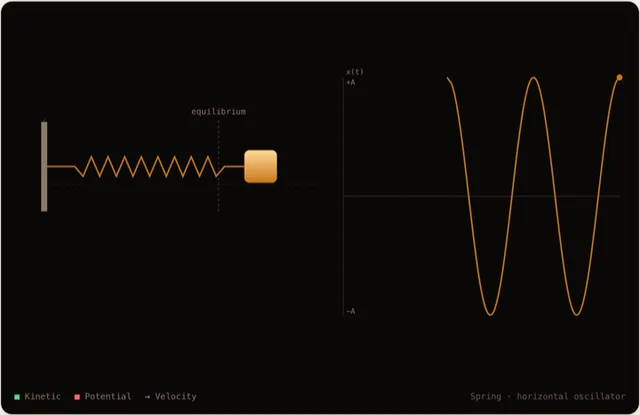
Simple Harmonic Motion SHM Explorer A spring-mass and pendulum oscillate while a sine curve and energy bars track them.
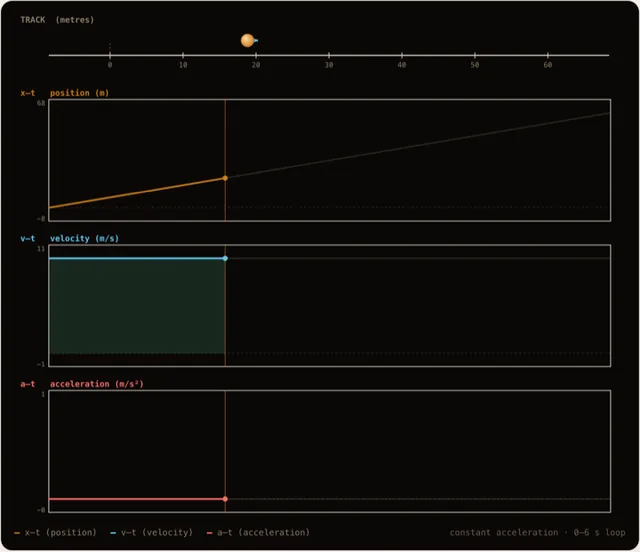
Kinematics 1D Motion & Kinematic Graphs Drive a particle along a line and watch its x–t, v–t and a–t graphs draw in sync.
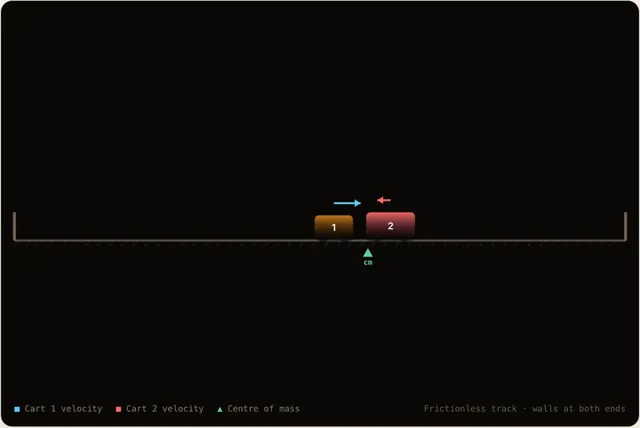
Momentum and Collision Collision Lab Two carts collide on a track; momentum, energy and the centre of mass update live.
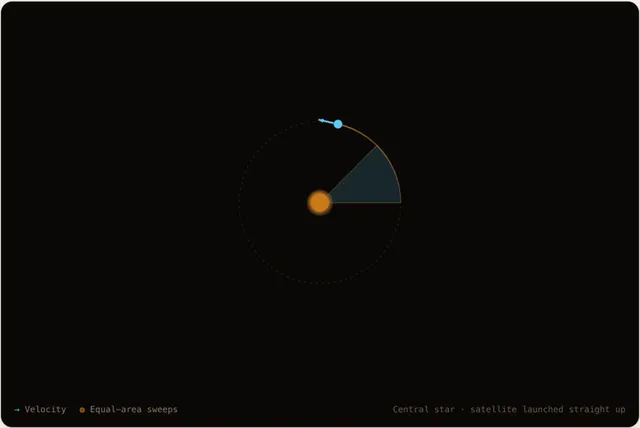
Gravitation Orbits & Kepler's Laws Launch a satellite and watch its orbit, equal-area sweeps and period obey Kepler.
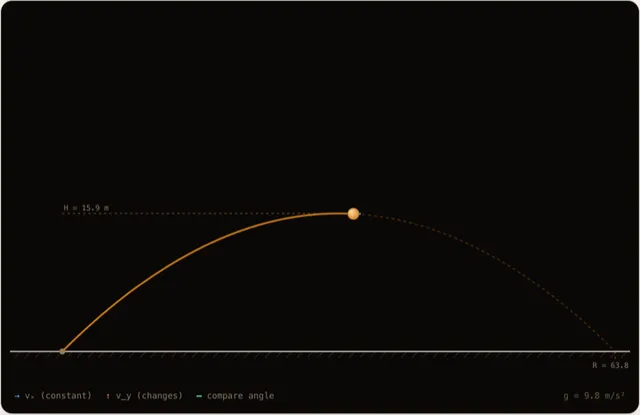
Kinematics Projectile Motion Playground Fire a projectile and trace its parabola with range, height and flight time.
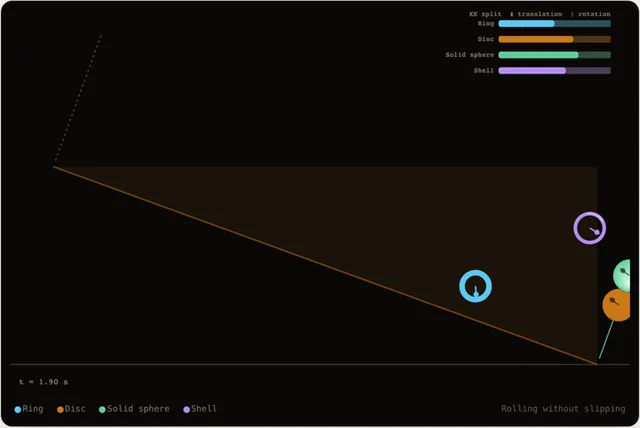
Rotational Dynamics Rolling Race Release a ring, disc and sphere down a ramp — and see who reaches the bottom first.
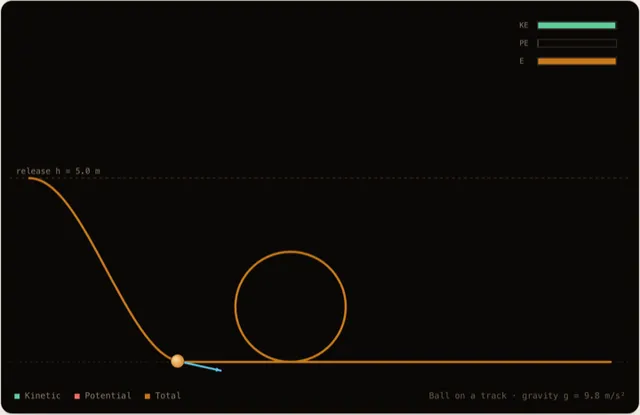
Force, Work and Energy Energy Track Send a ball over hills and through a loop while KE and PE trade off before your eyes.
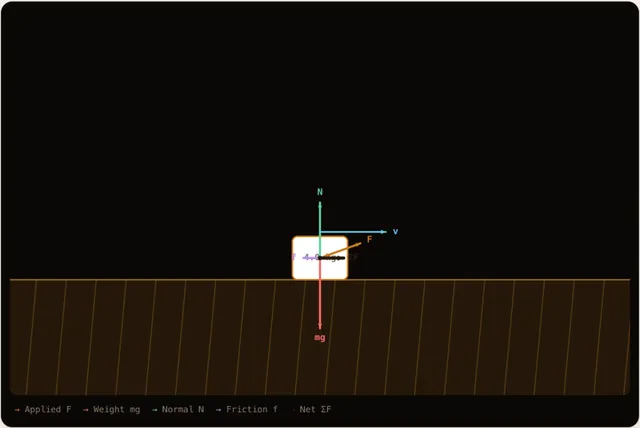
Newton's Laws of Motion Newton's 2nd Law & Free-Body Diagram Push a block with forces and watch the free-body diagram and acceleration resolve.
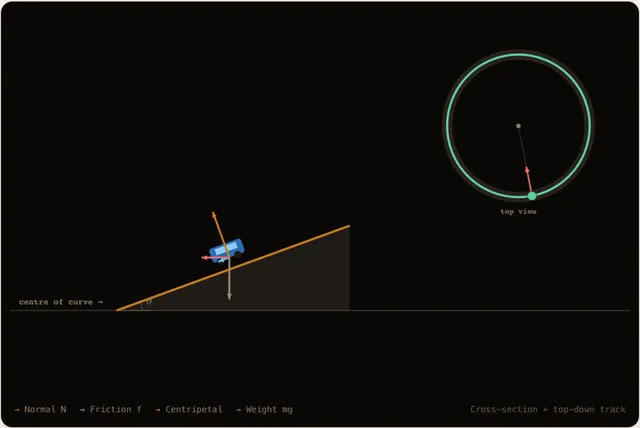
Newton's Laws of Motion Banking & Circular Motion Take a car around a flat or banked curve and find the fastest safe speed.
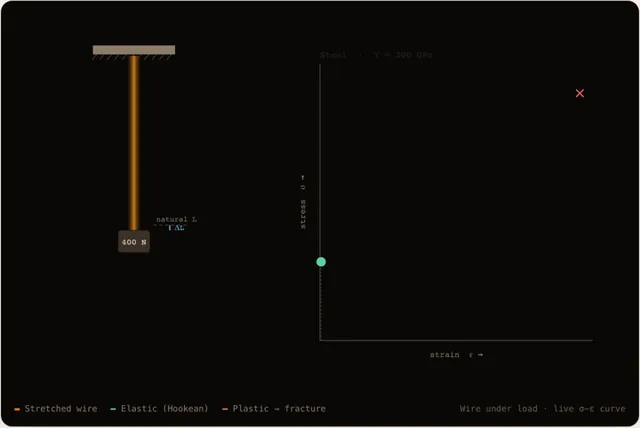
Properties of Matter Stress–Strain / Elasticity Stretch a wire and watch its stress–strain curve rise to the elastic limit.
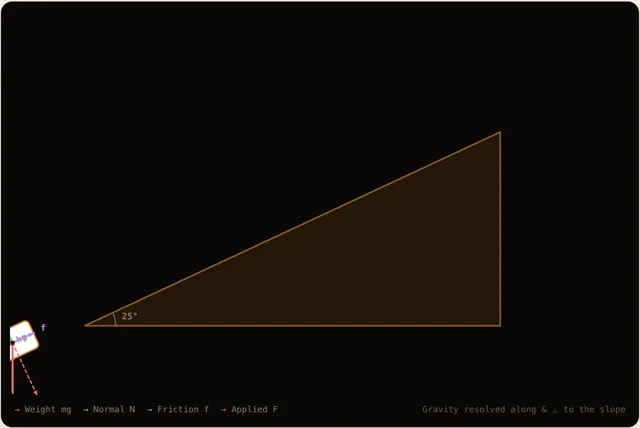
Friction Inclined Plane with Friction Place a block on a ramp and see whether it slides — with every force resolved.
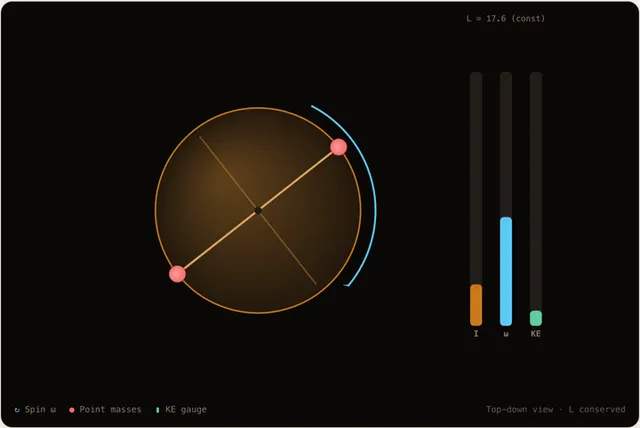
Rotational Dynamics Angular Momentum — Spinning Disc Change a spinning body's moment of inertia and watch its spin rate answer.
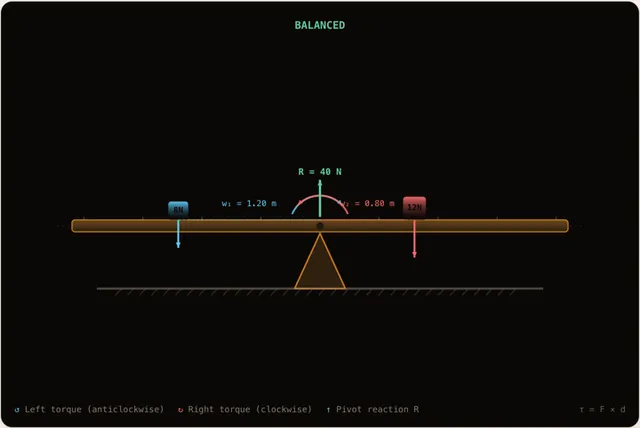
Rotational Dynamics Torque & Equilibrium Balance a beam by placing weights, then read off the support reactions.
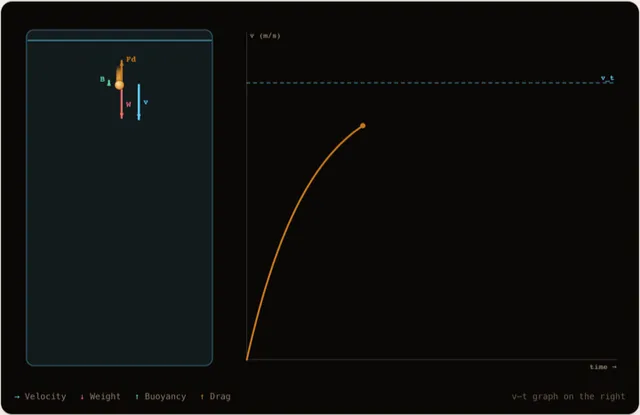
Fluid Mechanics Viscosity & Terminal Velocity Drop a sphere into a viscous fluid and watch it settle to a steady terminal speed.
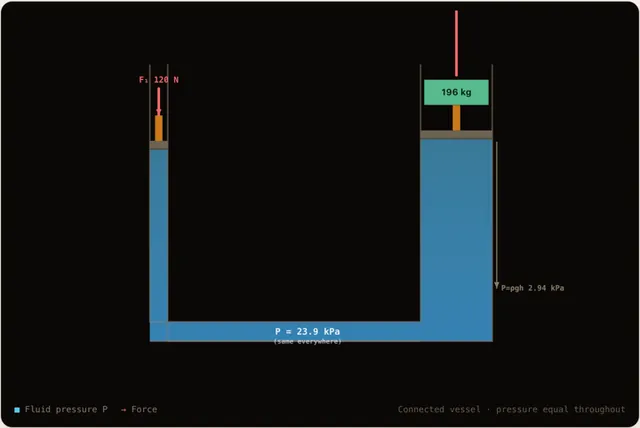
Fluid Mechanics Hydraulic Press Press a small piston and lift a big load — Pascal's law made tangible.
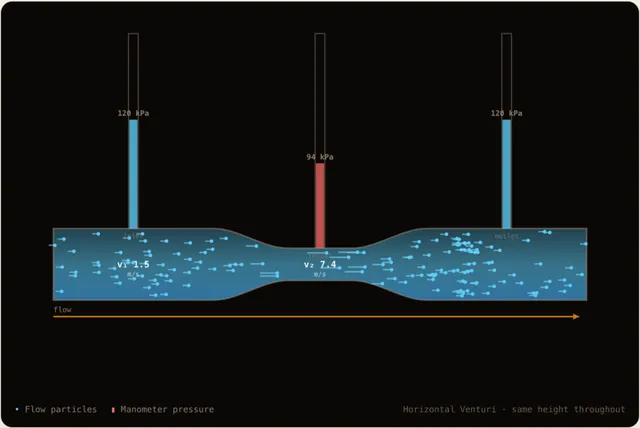
Fluid Mechanics Bernoulli — Pipe Flow Push fluid through a narrowing pipe — it speeds up and its pressure drops.
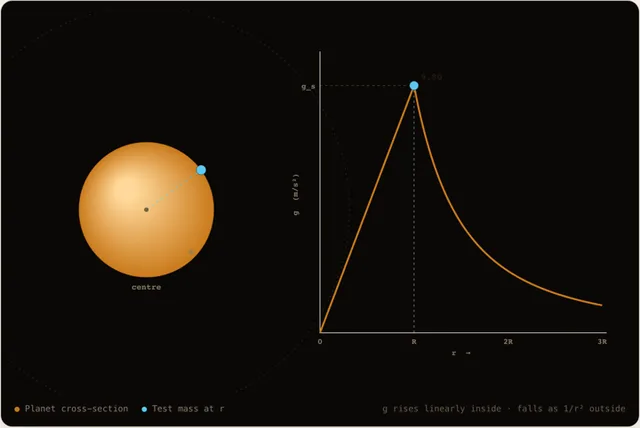
Gravitation Gravity & g-Variation Move a mass from a planet's core out into space and watch g and its weight change.
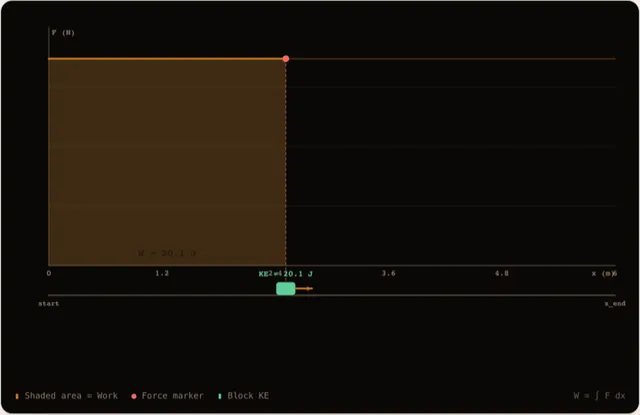
Force, Work and Energy Work by a Variable Force The work done by a force is the area under its force–position graph.
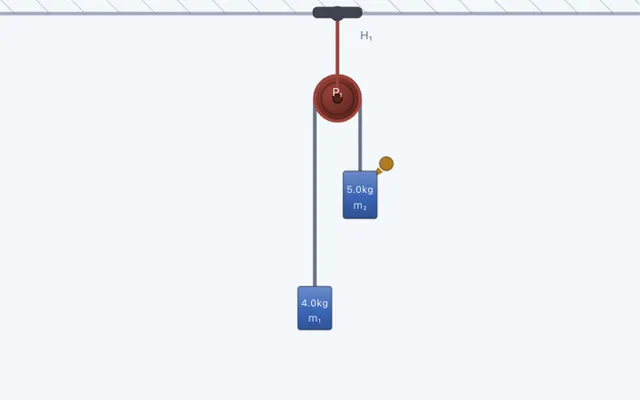
Forces and Motion Mechanics Bench — build a machine and read every force in it Hang blocks, thread rope over pulleys, tip a ramp — then let it go.
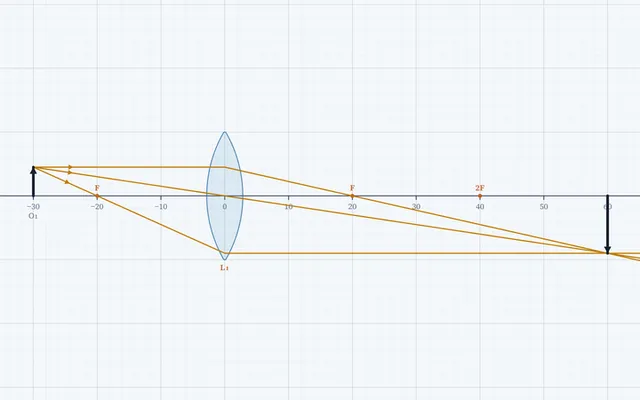
Light Optics Bench — lenses, mirrors, prisms and where the image forms Put a lens, a mirror or a prism in front of an object and watch the rays find the image.
Nothing matches those filters yet. Clear one and try again — or browse by chapter.