Guided
Experiments to follow
The bench will tell you what to do, one step at a time. Nothing about the chemistry is scripted — the reagents react the way they react, and the instructions only decide the order you meet them in. Prefer to mix things yourself?
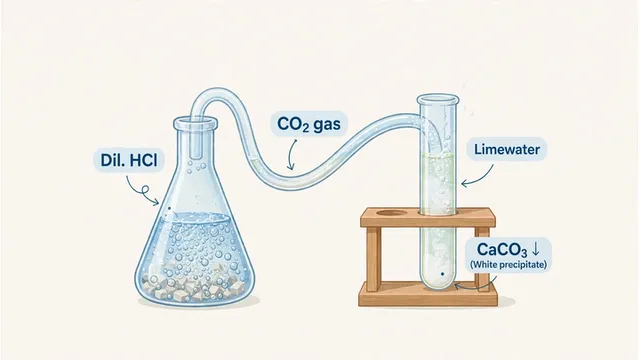
Acids, Bases & Salts · 5 steps Carbon dioxide, and how to prove it Make a gas from marble chips and acid, then show it really is carbon dioxide.
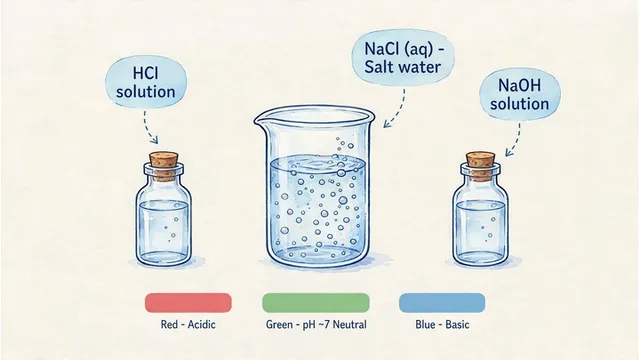
Acids, Bases & Salts · 5 steps Neutralisation, watched with an indicator An indicator turns a colour change into the moment an acid cancels a base.
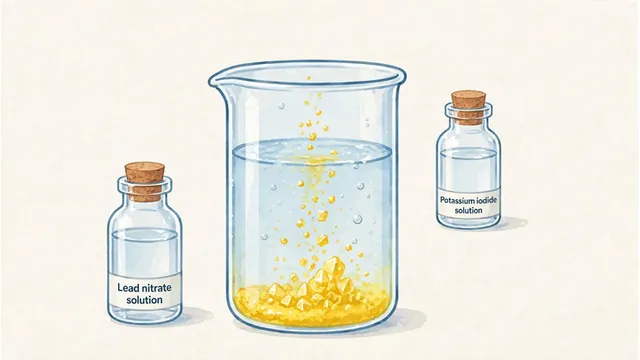
Chemical Reactions · 3 steps Two clear solutions, one yellow solid Nothing about either liquid suggests a colour — and yet a bright yellow solid appears.
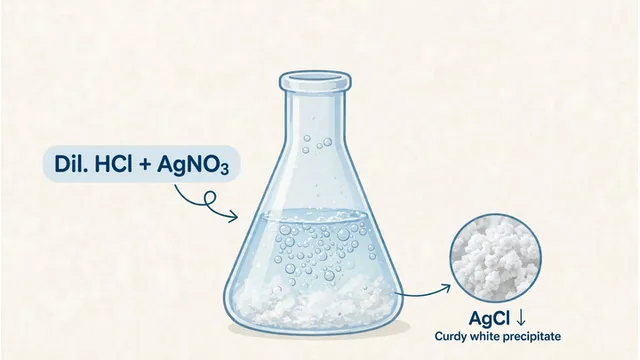
Study of Compounds · 4 steps HCl Test Using Silver Chloride Silver nitrate meets dilute hydrochloric acid — a curdy white solid forms, and only ammonia will dissolve it.
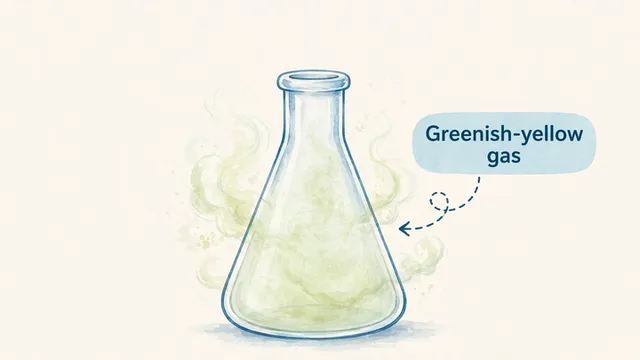
Study of Compounds · 5 steps HCl Test - Greenish Yellow Chlorine Heat manganese dioxide with the concentrated acid, and a greenish-yellow gas gives away what the acid is made of.
NaCl + H₂SO₄ → NaHSO₄ + HCl↑
Study of Compounds · 8 steps Making hydrogen chloride, and the test that names it Warm rock salt with concentrated sulphuric acid, collect the gas, and watch it meet ammonia.
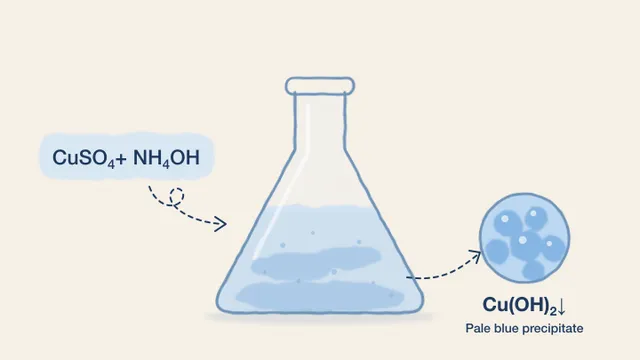
Study of Compounds · 2 steps Ammonia Test - Pale Blue A little ammonia added to copper sulfate throws down a precipitate neither solution showed on its own.
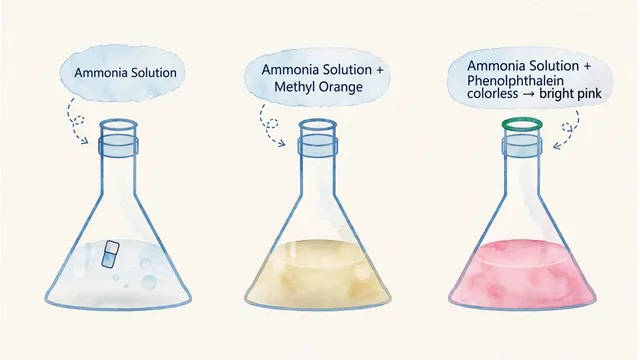
Study of Compounds · 6 steps Ammonia's basic nature, shown three ways The same ammonia solution turns pH paper blue, methyl orange yellow, and phenolphthalein pink.
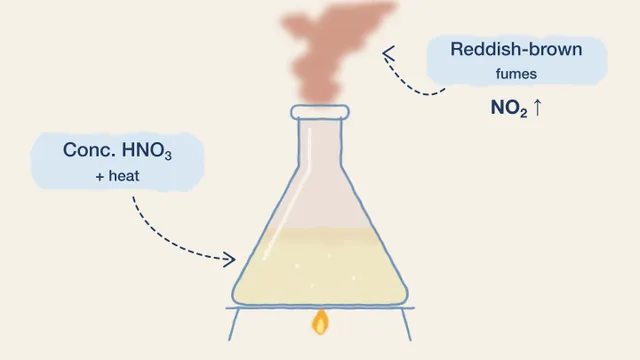
Study of Compounds · 4 steps Nitric Acid Test - Reddish Brown Fumes Heat concentrated nitric acid on its own, and reddish-brown fumes appear — no second reagent required.
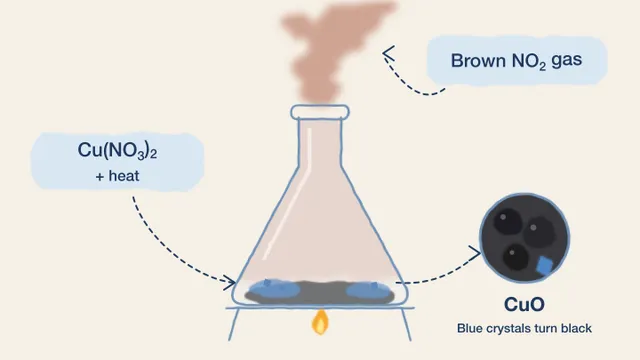
Study of Compounds · 4 steps Metal Nitrate Test - NO2 Gas Heat copper nitrate crystals, and the blue solid turns black while reddish-brown fumes escape.
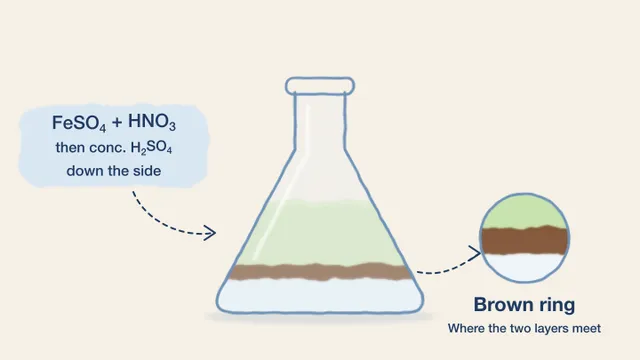
Study of Compounds · 4 steps HNO3 Test - Brown Ring Test Ferrous sulfate meets dilute nitric acid and concentrated sulphuric acid, and the pale green solution turns brown.
BaCl₂ + H₂SO₄ → BaSO₄↓ + 2HCl
Study of Compounds · 2 steps Dilute sulphuric acid, and the white precipitate that confirms it Barium chloride meets dilute sulphuric acid, and a white solid that will not dissolve gives the acid away.
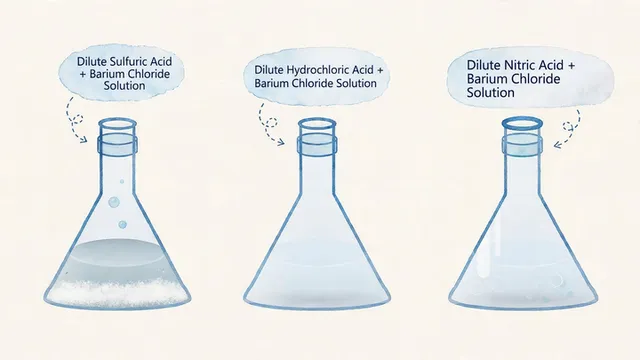
Study of Compounds · 6 steps Telling dilute sulphuric acid apart from hydrochloric and nitric acid The same barium chloride is added to three dilute acids — only one of them turns cloudy.
CaCO₃ + 2HCl → CaCl₂ + H₂O + CO₂↑
Mole Concept · 8 steps How much gas comes off a marble chip? The same reaction as the lime-water test, asked with a number. 🔒 Sign-in needed
HCl + NaOH → NaCl + H₂O
Mole Concept · 8 steps How much alkali neutralises the acid? Two colourless solutions, no visible change, and a number that says exactly when it is neutral. 🔒 Sign-in needed
Zn + 2HCl → ZnCl₂ + H₂↑
Mole Concept · 6 steps How much hydrogen does zinc give? Moles from a mass, not a volume, and the metal left over at the end. 🔒 Sign-in needed
Pb(NO₃)₂ + 2KI → PbI₂↓ + 2KNO₃
Mole Concept · 6 steps Equal amounts, unequal shares The same volume at the same strength, and still one reagent runs out first. 🔒 Sign-in needed
Fe + CuSO₄ → FeSO₄ + Cu↓
Mole Concept · 6 steps How much copper plates onto the nail? A displacement you can weigh: blue solution, iron nail, and copper coming out. 🔒 Sign-in needed
Cu + 2AgNO₃ → Cu(NO₃)₂ + 2Ag↓
Mole Concept · 5 steps Silver from a copper strip Each copper atom frees two silver atoms, so you gain more mass than you lose. 🔒 Sign-in needed
These sit in the full catalogue too, beside the simulations for the same chapters.